

In the spring of 1856, an eighteen-year-old chemistry student named William Perkin spent his Easter holiday in a makeshift laboratory on the top floor of his parents’ house in the East End of London, trying to cure malaria.
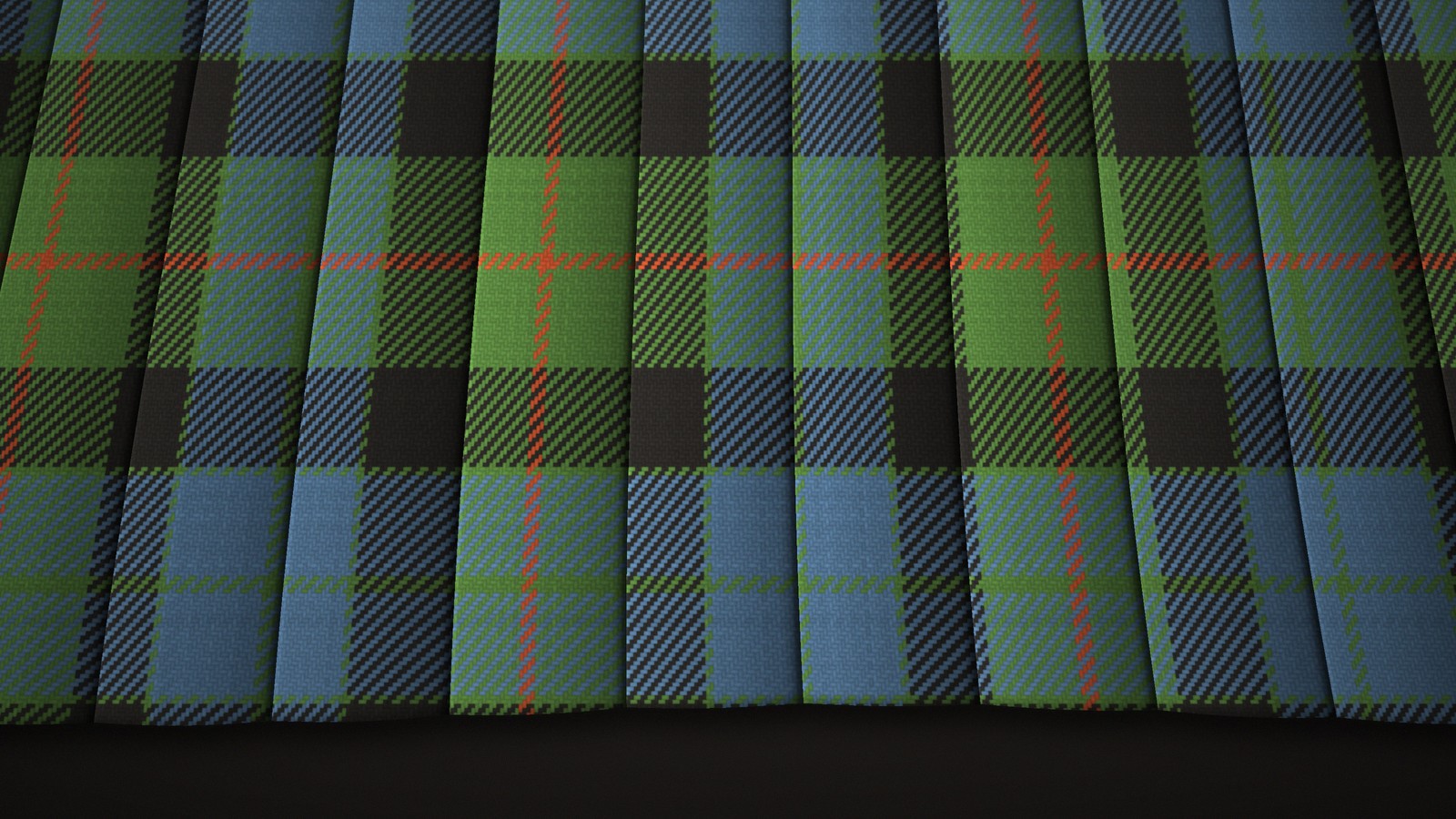
The only treatment for malaria was quinine, which came from the bark of a South American tree and cost a fortune. Perkin’s professor had suggested that it might be possible to make it artificially from coal tar, the black, stinking waste left over from producing gas for street lamps. Perkin tried. What he got was a reddish sludge. He tried again with a different coal-tar chemical, aniline, and got a black one. The accident would change the colour of every tartan in Scotland, and the soft Gunn Ancient tartan is a way of seeing what the cloth looked like before it.
He was washing the black mess out of the flask with alcohol when he noticed that the liquid running down the glass was a brilliant purple.
A more single-minded young man would have poured it down the sink. Perkin dipped a piece of silk in it. The colour took, and it did not wash out, and it did not fade in the window. He patented it that August, left college, and built a factory. He called the colour mauve. Within two years Queen Victoria had worn it to her daughter’s wedding and half of fashionable Europe was dressed in it. Within ten, chemists had conjured a whole rainbow out of coal tar, and the old craft of dyeing with plants, which had coloured every piece of cloth in human history up to that moment, was finished.
This is a story about what that did to tartan. It begins five hundred miles north of Perkin’s attic, with a woman and an iron pot.
The dye pot
Picture a township in the strath of Kildonan, in the hill country of the Gunns, a generation or two before Perkin was born.
The cloth that people wore here was made here, from the fleece up. The wool was sheared, washed, carded and spun at home, and before it went to the weaver it had to be dyed, and dyeing was women’s work and women’s knowledge. It was passed from mother to daughter and it was as much a part of the landscape as the hills.
For yellow there were heather tips, gathered young, or bog myrtle. For a warm red-brown there was crotal, the grey lichen scraped off the rocks with a spoon, which would dye wool without any help and left it smelling faintly of the hill for ever. Alder bark or dock root, boiled up with a lump of bog iron, gave black. Green was a two-stage job: dye the wool yellow, then dye it again with blue. Blue itself was the difficult one. It came from woad, or from indigo bought in a cake from a travelling merchant, and it needed a vat of stale urine kept warm by the fire for a fortnight, which is one reason the dye house stood well away from the dwelling.
The colours these methods gave were beautiful and not at all what we now think of as tartan colours. They were soft. They were a little uneven from one batch to the next. The blue was a clear mid-blue, the green a leaf or moss shade, the red closer to brick or coral than to a pillar box. A web of tartan woven from them glowed quietly. It did not shout.
How tartan went dark
Coal-tar dyes changed all that, and fast.
The new colours were cheap, they were dependable, and above all they were strong. A manufacturer could now have a navy so deep it was nearly black, a bottle green, a blazing scarlet, and have them identical in every batch. The tartan trade, which was booming on the back of Queen Victoria’s passion for the Highlands, took them up with enthusiasm. By the last decades of the nineteenth century the saturated palette had become simply what tartan looked like. The mills called these Modern colours, and they are what most people still picture when they hear the word.
Then, in the early decades of the twentieth century, some weavers began to wonder what had been lost. They started offering an alternative range, dyed to suggest the look of the old vegetable colours: lighter blues, mossier greens, reds leaning towards orange. They named these Ancient colours, or Old Colours.
That name has caused confusion ever since. An Ancient tartan is not an older pattern than a Modern one. It is the same pattern, thread for thread. The word describes the dye and nothing else. Later still came Weathered or Reproduction colours, all browns and greys, imitating cloth that had lain in a peat bog, and Muted colours, somewhere in between. A mill may list a single clan’s tartan four times over, and all four are equally authentic.
The Gunn, twice
The Gunns are a clan of the far north-east, of Caithness and the eastern edge of Sutherland, with a tradition of descent from the Norse Earls of Orkney. Their history is full of hard knocks: a long blood feud with the Keiths, steady loss of land to bigger neighbours, and finally the clearance of Kildonan in 1813, which sent many of them to the Red River in Canada. Their tartan was published by James Logan in 1831, not twenty years after the glen was emptied. It is a simple, strong design: a green ground, a broad band of dark blue and a broad band of black with a fine green line between, and a single thin red line running through the green.
In Modern colours it is a sombre cloth. The archive notes on the sett remark that the blue is often woven so dark that it cannot be told from the black, so that the pattern seems to be four equal dark stripes on a forest-green field. It is a fine tartan for a man’s formal kilt. In Ancient colours the same sett becomes one of the prettiest cloths there is for plaid pleated skirts for women, which is where this story ends up.
In Ancient colours it turns into something else entirely. The green lifts to the shade of a new leaf. The blue clears to a mid-blue and, for the first time, steps away from the black so that you can see the design as Logan drew it. The red line warms to a soft rust. It is as if someone had opened a shutter. If the woman with the iron pot could be shown both versions, there is no doubt which she would recognise as hers.
Clan Gunn’s own literature lists weathered, ancient, muted and modern colourings as recognised, so Gunn Ancient tartan is as proper a choice as any. Suppliers carry it alongside the others, for kilts, skirts, sashes and scarves, and by the yard.
Melbourne, a Saturday in early spring
Ellie Gunn is twenty-six and in the final year of a textile design degree. Her flat is full of things in jars. For her major project she has spent the winter dyeing wool with plants, eucalyptus leaves, onion skins, madder root, indigo in a bucket on the balcony, and she has come to the conclusion that the colours you get from a pot are kinder than the colours you get from a factory. They sit together more easily, and nothing ever quite clashes.
She has two swatches on the table, sent from the other side of the world. Same name, same pattern. One is nearly black, with green. The other is leaf green, clear blue and rust.
Her grandfather came out from Caithness in 1952, and she has wanted something in the family tartan for a while. Not a kilt. She wants a skirt, the kind she can wear to the studio and to her cousin’s wedding in November. She had expected to settle for the dark one, because she thought that was what tartan was. Holding the other up to the window, she realises she has just spent six months learning why it looks the way it does.
She knows her way round a pleat, so choosing the cut is a pleasure. Knife pleats, all facing the same way and pressed sharp, are the pleats of the kilt, and they swing the most. On a properly made skirt they are stitched down from the waistband to the hip, so the cloth lies flat over the stomach and only opens out below. Box pleats are softer and more architectural. Then there is the question of how the pattern is folded. Pleated to the sett, the tartan carries on unbroken across the pleats as though the cloth were flat. Pleated to the stripe, one line is centred on every pleat, so the skirt looks one colour standing still and flashes another when you walk. She thinks about pleating to the rust line, all green with a fine orange stripe, showing blue when she moves, and cannot think of anything she wants more.
A Highland-wear maker’s range of plaid pleated skirts for women runs from mini through knee and midi to full length, with A-line, pencil, wrap and skater cuts alongside for anyone who wants the cloth without the pleats. What matters to her is that the tartan is a real named sett, woven and not printed, and that the skirt is cut to her own measurements in whichever of several thousand tartans she asks for. She measures her waist where she wants the skirt to sit, her hips at the fullest, and the length from waist to mid-calf, standing up straight in her boots. She orders a midi, knife-pleated.
She already knows what she will wear with it. The soft palette goes with everything the dark one fights. A cream knitted jumper. A white shirt with the sleeves pushed up. Her tan boots and her old denim jacket. Tights in forest green or chocolate when it turns cold, not black, which is too hard against these colours. A rust-coloured scarf she dyed herself with madder in July. Nothing else patterned, ever. For the wedding, a fitted ivory top and the sash in the same sett, pinned at the shoulder with her grandmother’s brooch.
When it comes she will hang it by the waistband from a clip hanger, and if the pleats ever soften she will press them one at a time, on the wrong side, through a damp cloth. She has been told the yarn is washable. She will wash it by hand anyway, because she is that kind of person.
The colour of the hill
William Perkin died in 1907, rich, knighted and honoured on both sides of the Atlantic. He never did make quinine. What he made was the modern world of colour, and as a side effect he turned the tartans of the Highlands several shades darker than any Highlander had ever seen them.
The Ancient colours are a twentieth-century guess at what was lost. They are made with modern dyes in a modern mill. But the instinct behind them is sound, and in a cloth like the Gunn the result is lovely: green, blue and rust in the soft tones that a woman in Kildonan once coaxed out of heather, lichen and a cake of indigo. It is very pleasing that a great-great-great-granddaughter of that glen, with dye under her fingernails, should pick it out of two swatches by eye.